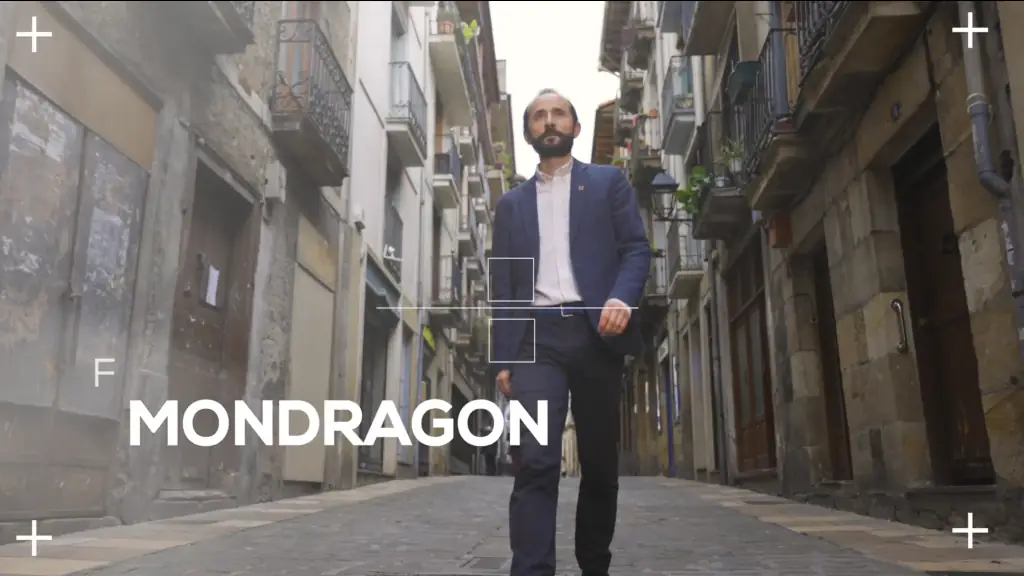
Mondragon Corporation already exists in our world, not as a thought experiment or a niche ethical brand, but as a large-scale, decades-old federation of worker-owned cooperatives operating across industry, finance, retail, and advanced manufacturing. It competes globally while being governed on the principle of one member, one vote, with workers collectively owning the enterprises they run and electing the bodies that set strategic direction. Mondragon companies design and build some of the most sophisticated industrial systems in use today — high-precision CNC machine tools, automated manufacturing lines, industrial robotics, and control systems that sit at the core of modern production. This isn’t a rejection of complexity, scale, or technology; it is proof that democratic ownership can coexist with technical excellence, long-term planning, and global reach. When people say “that would never work in the real world,” Mondragon stands as an inconvenient fact: it already does.
Mondragon Corporation isn’t one giant company with a CEO barking orders down a chain. It’s a federation of largely self-governing worker cooperatives that agree to play by a shared set of rules, pool certain resources, and coordinate strategy where it makes sense. Organisationally it’s grouped into four broad areas — Finance, Industry, Retail, and Knowledge — which is basically Mondragon’s way of admitting that manufacturing muscle alone doesn’t build a durable ecosystem unless you also control capital, training, and innovation.

At the co-op level, the backbone is simple and blunt: worker-members are the owners, and the General Assembly (one member, one vote) is the top authority. That assembly elects a governing board (often called a Governing Council) which sets direction and hires/oversees management, while a Social Council represents members on day-to-day workplace and social issues — a formal channel so participation isn’t just a slogan. (Different co-ops implement details differently, but that democratic spine is the point.)

At the federation level, Mondragon runs a layered model: individual co-ops sit at the base; above them are divisions / groupings that coordinate by sector; and above that are corporate governing bodies (a Cooperative Congress plus committees/councils that handle group-wide policy when the Congress isn’t sitting). Think of it as a constitution plus a parliament, not a corporate org chart.
What makes Mondragon structurally interesting (and tougher than it looks) is the solidarity logic: co-ops cooperate through shared finance, training, and (historically) mechanisms to support weaker co-ops rather than letting them immediately die. That said, it’s not frictionless — in late 2022, big members like ULMA and Orona voted to leave the federation, largely over autonomy and obligations such as contributions to common funds, while still keeping some collaborative links. That’s the real world intruding: federations constantly balance autonomy vs. mutual responsibility.
On the “advanced products” side, Mondragon isn’t cute craft co-ops — it builds serious industrial kit:
SORALUCE (inside Danobatgroup, Mondragon’s machine-tool cluster) designs and manufactures large milling/boring and gantry-style machines used in heavy industries and high-precision applications.
DANOBAT itself is a cooperative machine-tool manufacturer known for high-precision grinding machines and lathes, with sustained investment in innovation.
Fagor Arrasate builds automated, custom material forming and cutting installations — press and stamping systems and turnkey forming lines for demanding sectors like automotive and energy-transition supply chains.
Fagor Automation develops CNC systems and feedback/encoder systems for machine automation and control — the brains and nerves that make modern machine tools accurate and productive.
Mondragon Assembly builds automation and assembly solutions, including equipment and lines for photovoltaic (solar) module manufacturing.